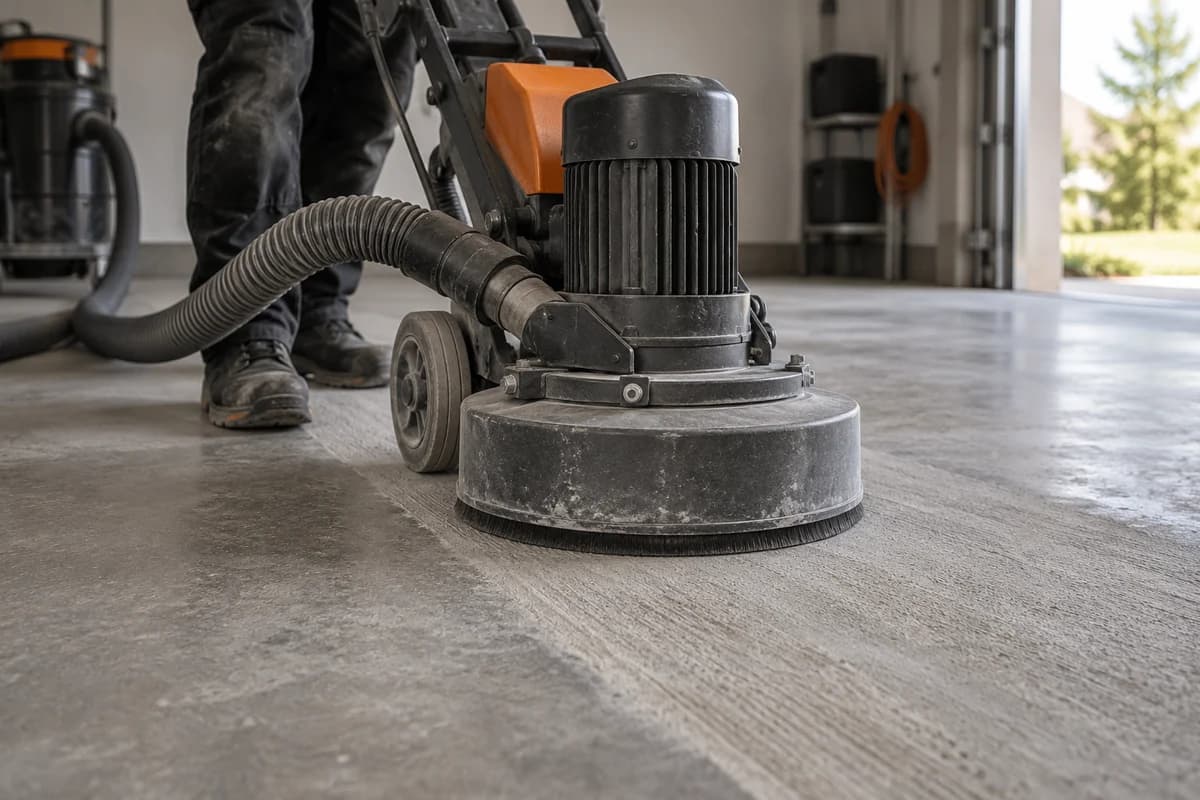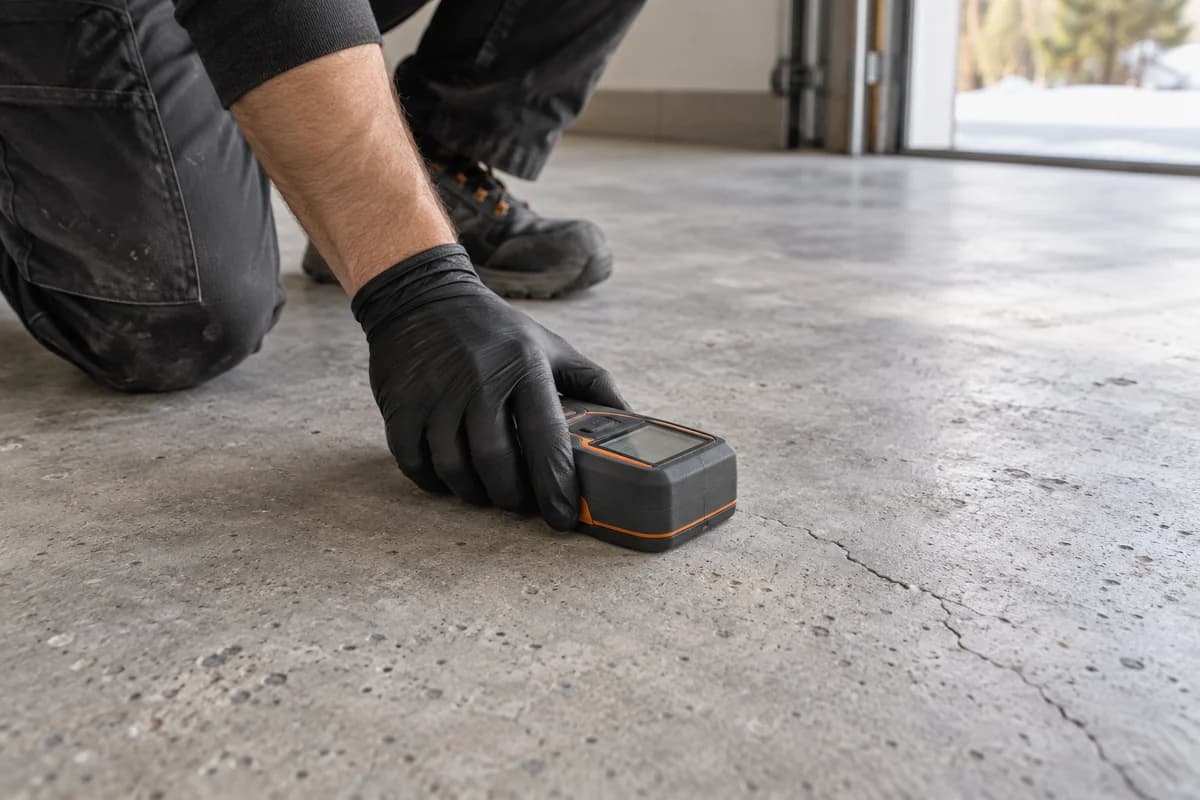
Your garage receives everything your tires bring home: gravel, sand, water and de-icing salts. Regular care prevents those residues from building up on the finish.
Remove abrasive grit before washing. Use a compatible cleaner and follow the instructions provided for your coating.
Start with dry cleaning
Use a soft broom or vacuum to remove sand. Moving a dirty mop across the floor may drag abrasive particles instead of removing them. Check wheels, furniture pads and the underside of objects you move.
Clean oil spills promptly using the recommended compatible method. Stain resistance is not a reason to leave contaminants on the surface.
Wash without leaving a film
Choose a gentle method and a cleaner approved for the system. Follow dilution instructions, rinse if needed and remove standing water. Do not mix cleaning products or improvise with concentrated acid.
Soap residue can make the floor slippery and dull its appearance. If the surface turns white or changes, stop experimenting and identify the cause before scrubbing harder.
Prevent small, repeated damage
Use compatible protection beneath heavy equipment and avoid dragging metal objects. Mats should be able to dry and should not transfer colour or plasticizers to the coating.
Inspect traffic areas, joints and edges in spring. Local damage is easier to address when reported early. Keep maintenance instructions with your invoice so the exact system can be identified.
Your checklist
- Remove grit regularly
- Use a compatible cleaner
- Remove water and residues
- Report damage promptly
Recommendations must be adapted to the substrate and documentation for the installed system. This article does not replace a site assessment.