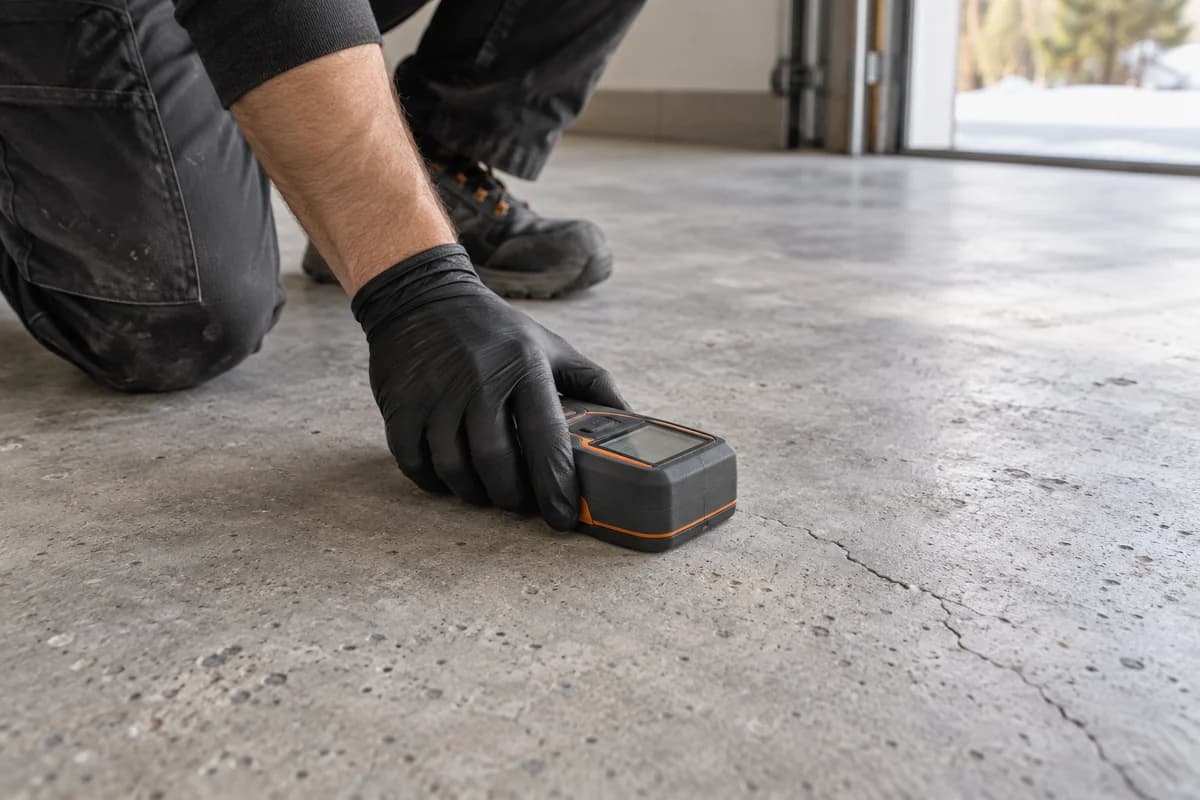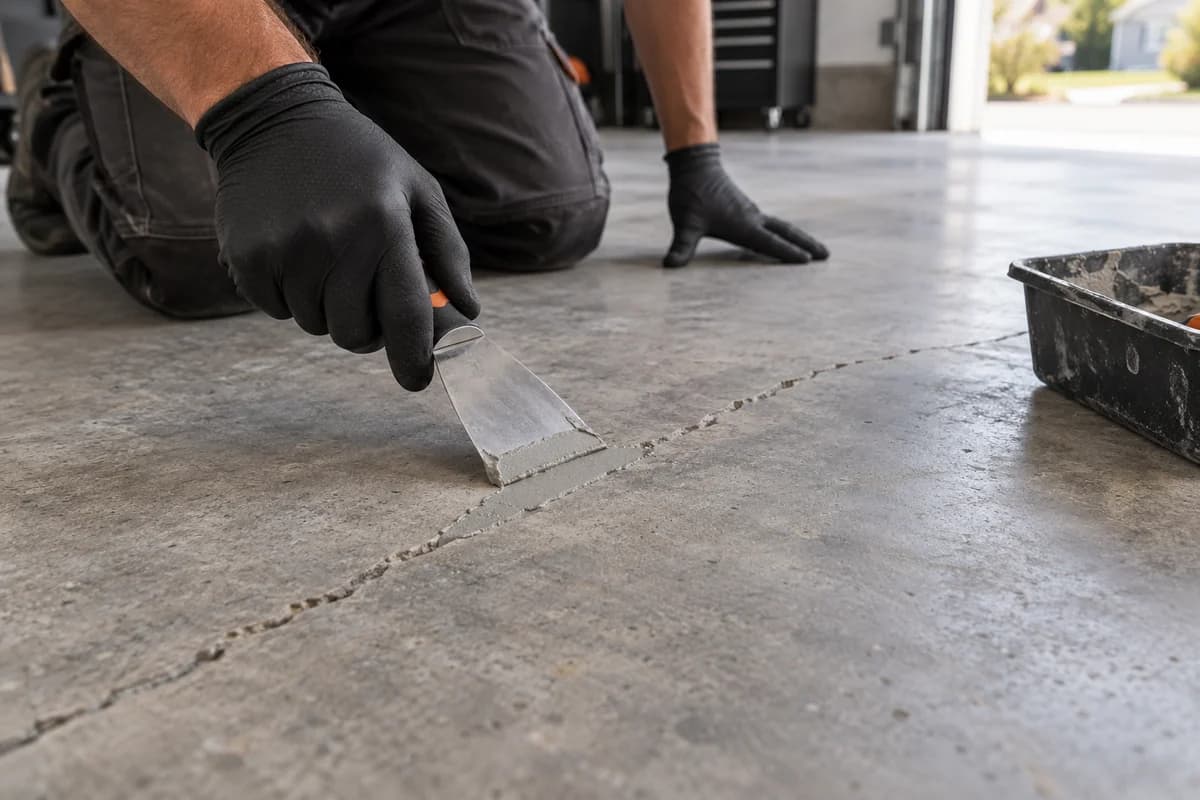
A crack does not automatically mean the slab must be replaced. Filling it without understanding its behaviour may simply postpone the problem.
The coating depends on its substrate. Continued slab movement can cause a crack to reappear through the finish.
Document what changes
Note the location, any height difference and changes over time. A widening crack, a sticking door or a raised area deserves more than a cosmetic repair.
Keep dated photographs and share any previous reports. These observations guide assessment; they do not replace specialist diagnosis when the structure is involved.
Respect the joints
Joints can play a role in slab movement. Making all of them disappear should not be promised just to achieve a continuous appearance. Treatment depends on joint type and the selected system.
Eligible surface defects can be prepared and repaired using compatible materials. Compound selection and the time before recoating are part of the work, even when those steps are hidden in the final result.
Understand resurfacing limits
Deeply weakened concrete, persistent infiltration or suspected swelling may require other work. Coating is not a solution for pyrite or structural movement.
Request a written explanation of planned repairs and exclusions for future movement. A good estimate describes what will be corrected without promising the concrete will never move.
Your checklist
- Photograph cracks
- Report displacement or changes
- Identify joints to retain
- Investigate suspicious movement
Recommendations must be adapted to the substrate and documentation for the installed system. This article does not replace a site assessment.