They are often presented as an either-or decision. In practice, a coating may combine several resin families, each with a specific role.
Ask about the complete system. “Flake” describes a decorative effect; “epoxy” and “polyaspartic” describe resin families.
Separate the functions
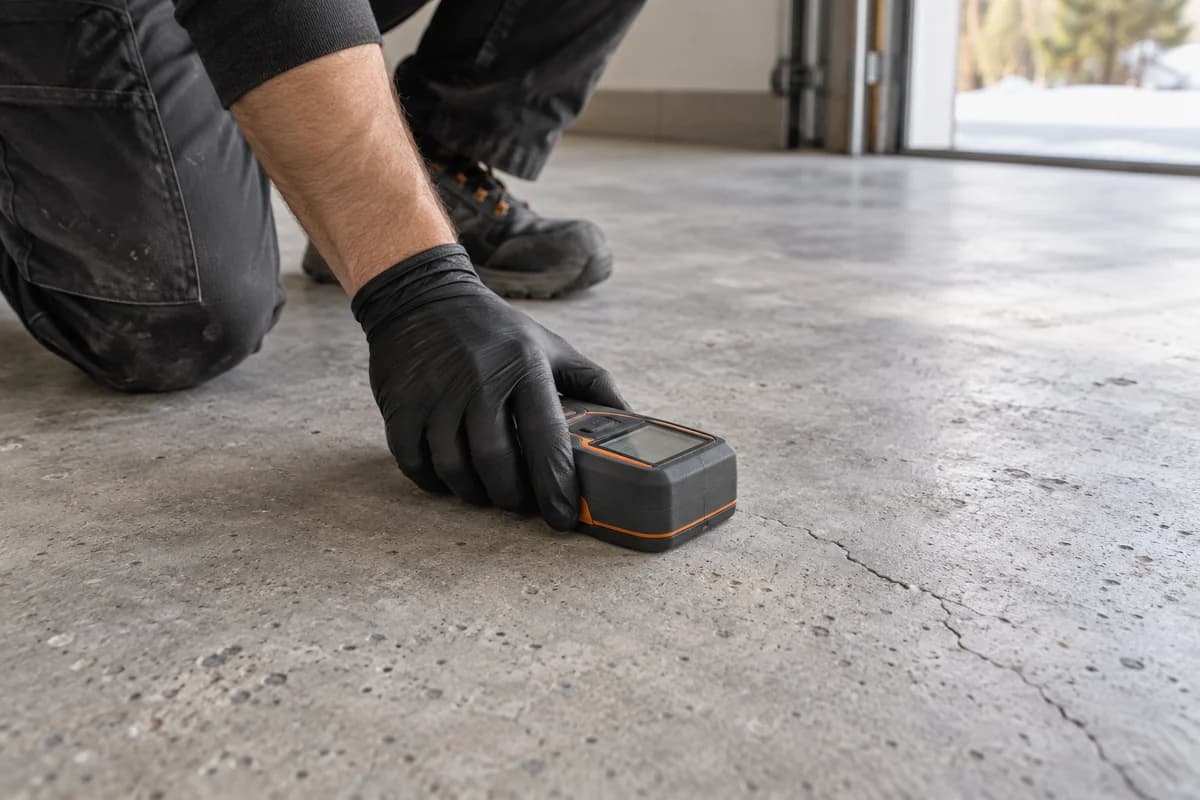
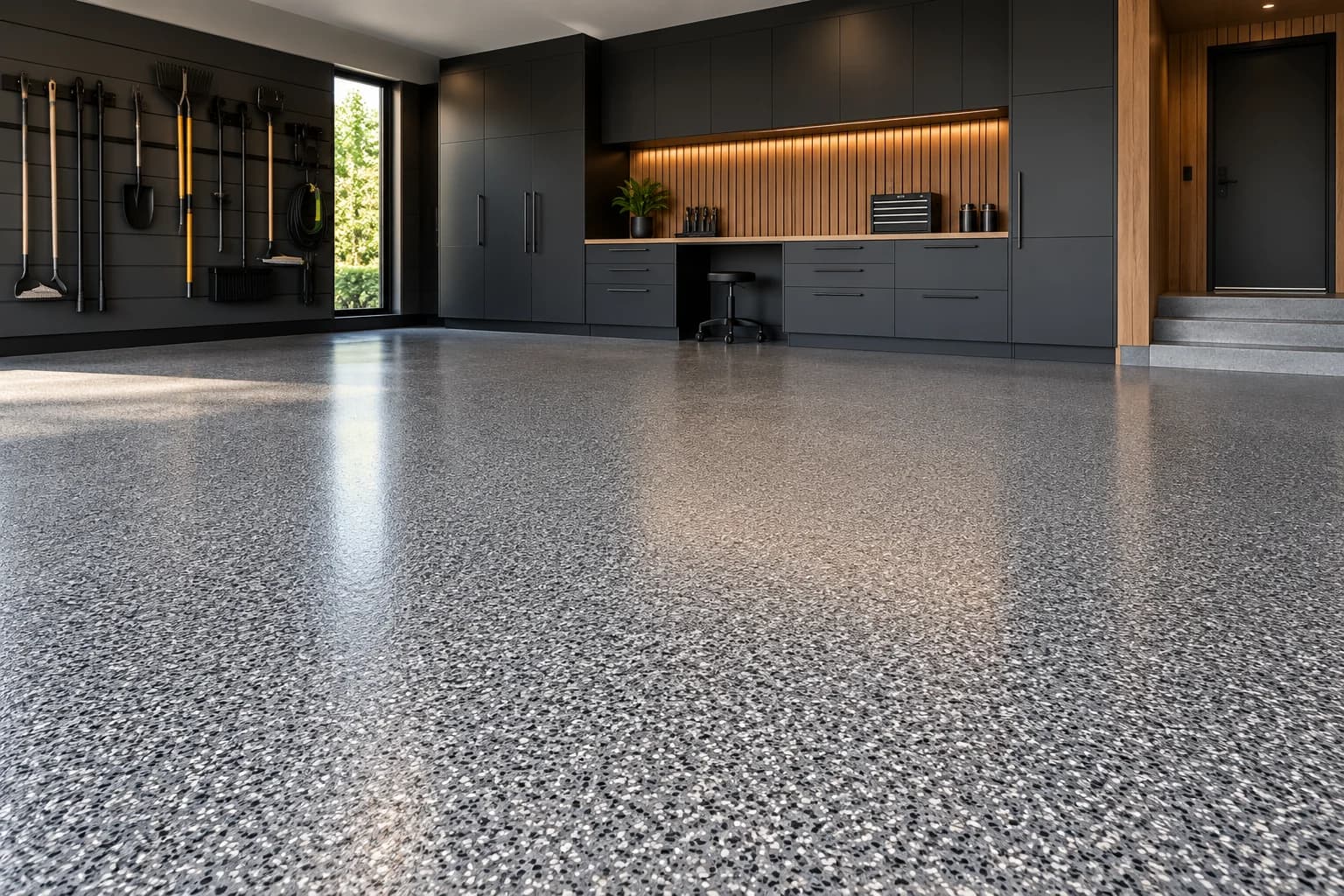
The substrate is prepared before receiving the layers specified for the selected system. One resin may form the base and another the final protection. Flakes are broadcast into a compatible layer, then protected according to the manufacturer’s process.
For your garage, what matters is the compatibility of the entire system with the concrete, application conditions and service demands. A resin name alone guarantees neither adhesion nor installation durability.
UV, working time and return to service
Some polyaspartics are formulated for UV stability and fast curing. Exact characteristics vary by product. A fast installation still requires suitable substrate conditions and compliance with specified cure times.
A decorative interior epoxy system may serve a different aesthetic goal. Selection also depends on the sheen, texture and maintenance you want.
The most useful question
Instead of asking only “is it polyaspartic?”, ask which system will be installed, how the slab will be prepared and why it suits your use. Ask for the moisture and sunlight limitations.
A clear answer connects the product to your project. If details remain vague, ask to have them included in the estimate before accepting the work.
Your checklist
- Base and topcoat identified
- Suitable for use and exposure
- Preparation described
- Walking and parking times distinguished
Recommendations must be adapted to the substrate and documentation for the installed system. This article does not replace a site assessment.