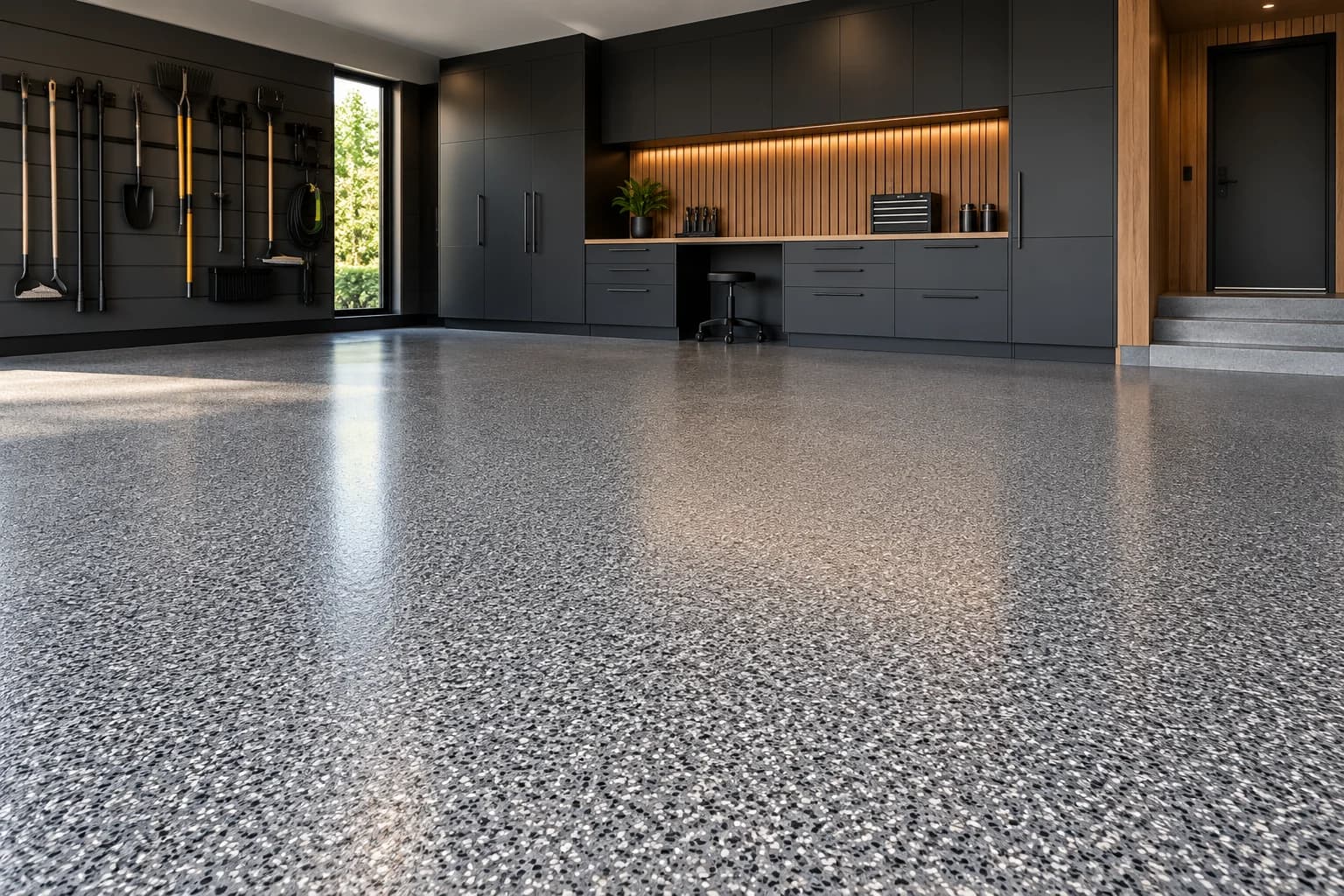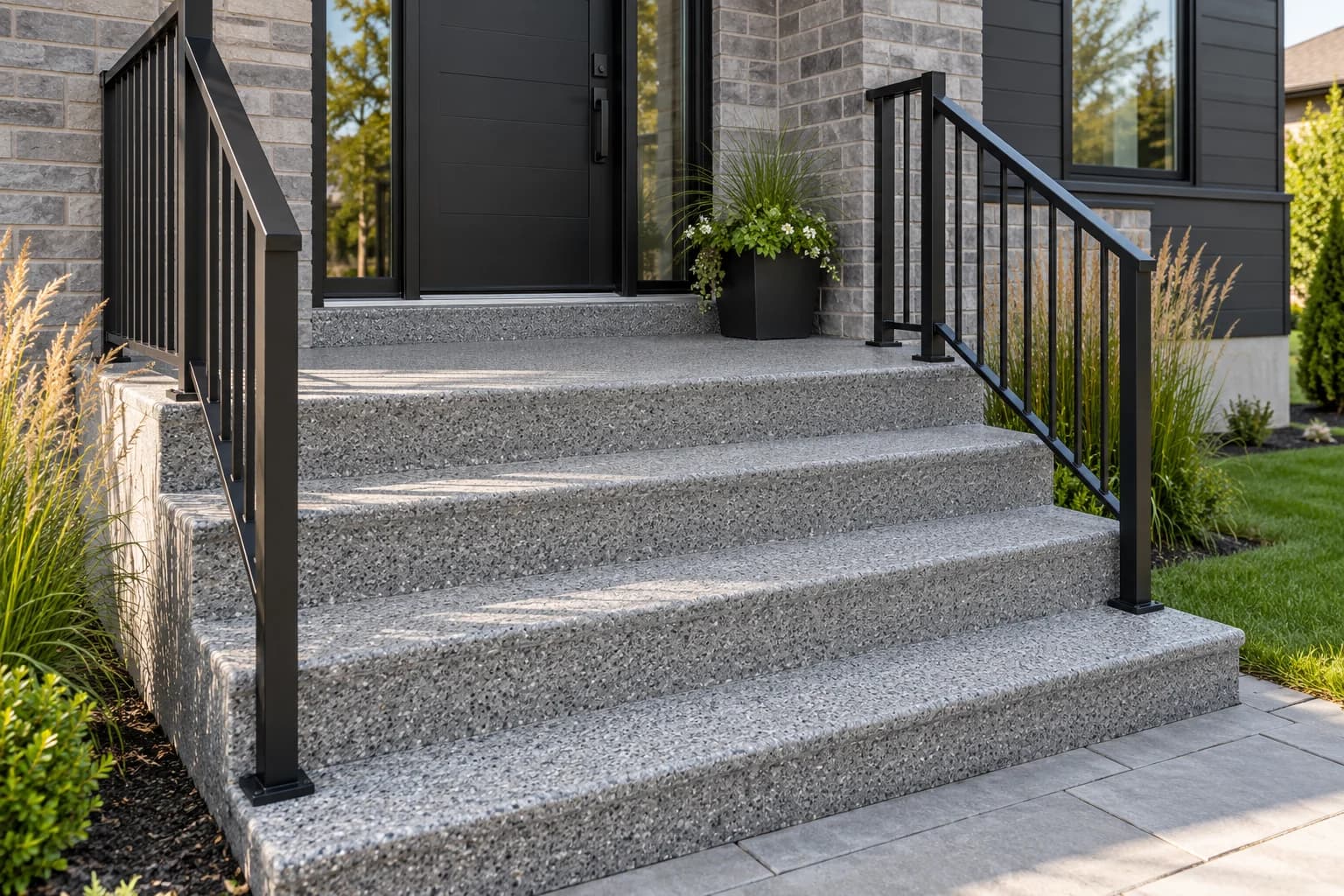
An entrance faces water, sunlight, wet footwear and snow removal. Its coating needs to be considered as part of a complete outdoor surface.
Texture does not replace drainage or winter maintenance. The system must match the actual exposure.
Inspect the geometry and concrete
Look for places where water collects after rain. Note cracks, damaged step edges, weak areas and railing anchors. Those details may need correction before finishing.
A coating should not hide a defect that will continue to deteriorate. Unstable steps or structural issues go beyond simple resurfacing.
Choose for sun and moisture
Products do not all have the same exposure limits. A finish suitable indoors may not work on a sunny porch. Ask whether the entire system is compatible with outdoor use.
Weather also affects the job. Temperature, humidity and rain risk must allow preparation, application and curing within the specified conditions.
Plan cleaning and snow removal
A more textured surface may need different cleaning tools than a smooth floor. Discuss the balance between traction, comfort and maintenance. Leaves, ice and contamination remain slip hazards.
Request snow-removal and de-icing instructions for the installed system. Follow a routine that prevents buildup and report damaged areas before they spread.
Your checklist
- Drainage observed
- Concrete and step edges assessed
- Exterior compatibility confirmed
- Winter care explained
Recommendations must be adapted to the substrate and documentation for the installed system. This article does not replace a site assessment.